

Category: Branding Trends

20180315132335-shutterstock-156257867.jpeg

Opinions expressed by the contributors are their own.

A logo is often times made synonymous with brand. But that’s far from the truth because branding is much more than creating a sleek-looking logo. Branding -when done well – has the penchant to create an emotional bond with customers and build enduring, meaningful relationships.

From the standpoint of a customer, the perennial brand denotes quality, trust, performance and commitment to 360-degree customer satisfaction – the differentiator that encourages your audience to become your friends for life.

Branding specialist Alina Wheeler summed it well when she said,

“How a brand is perceived affects its success, regardless of whether it’s a start-up, a nonprofit or a product.”

Brand reflects the personality of an organization via impactful visuals interspersed with timely messaging that has its heart in the right place.

But like advertising, publishing and marketing, branding is evolving at a breakneck pace. What used to work last year may not necessarily work this year and change is the only constant.

Here are seven branding trends for the remainder of 2018  and of course, beyond:

Experiential

Experiential branding has captivated the attention of global brands for a number of years now.

By the looks of it, this digital marketing trend is here to stay. No longer are companies merely satisfied at long-term customer engagement; they’re actually looking to let their customers avail a touch-and-feel experience of their business even before getting in touch with them (pun intended).

The focus is on starting and keeping a conversation with the audience that drives transformational change. In turn, this gives the company ample opportunity to involve its customers in results-driven story telling.

Custom illustration

Let’s face it. Your target audience is already inundated with information overload on an hourly basis and most of it is perfunctory, at best. The need of the hour is to cut through the noise and allow your unique value proposition to shine through.  A great way to do that is to deliver useful content to build a trusting relationship with your potential customers.

That’s where custom and branded illustrations become a game-changer as they lend a nuanced advantage to your content. Custom illustrations give your audience the impression of being a committed and competitive anchor partner.

At the same time, it opens up new doors for animation and stock imagery, which can be visible from the longest mile and augurs well for brand continuity.

Mobile First

We know that a responsive and interactive experience is a non-negotiable must for any web design initiative. With an assortment of handheld devices at our disposal, mobile web design has emerged as a vital facet of user experience.

Once you’ve established that your target audience is mostly mobile-based before you go all-out on focusing on mobile-fist design, you’ll be empowered with clarity of thought that encourages you to reduce visual hierarchy and unnecessary content to a bare minimum – thereby paving the way for heightened functionality.

This will also allow you to augment the creativity quotient of your website or general branding exercise without compromising on its functionality.

Color transitions and bold palette

Of late, clients have been going easy on brand colors, almost to the point of muting them in order to make their brands appear cleaner. With world-leading brands such as Instagram using color transitions to lend a bold yet simple look, other players are inevitably set to follow suit.

Now that is not to suggest that companies are not averse to experimenting with bold colors! Given that flat and material designs pair off well with bold colors – leaving plenty of room for intelligent animation and diverse branding literature – nothing should stop you from crafting a compelling style statement that gets you noticed.

Modular

In the past few years, categorizing or splitting your content into a modular layout has added generous doses of extra functionality to user interface (UI) designs. This has emboldened businesses to explore a seamless integration of images and social. Marketing in the years to come is going to be en essentially hybrid exercise if customer expectations are to be transcended.

It also goes a long way in enhancing the efficacy of responsive stacking, as visitors aren’t going to complain about having a wonderful time browsing on mobile devices AND desktop!

This intuitive design process of drawing pieces of content closer to each other and creating a cohesive visual powerhouse not only also helps with legibility and hierarchy, but also facilitates the transition from digital to print or vice-versa.

Aesthetic functionality

Recently, legendary graphic designer and typographer Stefan Sagmeister spoke at the D&AD festival, which has already created quite a stir on the internet. He asserted that one should not dismiss the possibility of leveraging form over function as a means of driving home the point that beauty is a measure of function.

Stefan argued that campaigns can promote themselves to be highly functional solely on the basis of their look and feel.

While this seems to go against the principles of design as per which ideas take precedence over beauty, he does seem to make a strong case for not neglecting on the all-important facet of aesthetic appeal.

By being delightfully (and sensibly) daring and creative, this would help your business stand tall and be noticed in an ever-growing crowd that is making it increasingly hard for new ideas to make their presence felt, let alone flourish.

By doing so, you’ll also be giving your audience an implicit message that you have the courage to undertake painstaking efforts to demonstrate your creative prowess – which is never a bad thing.

VR and 3D animation

With the growing popularity of virtual reality (VR) and augmented reality (AR), 3D designs swiftly becoming the go-to option for brands across the globe that are committed to delivering a lasting impression and position themselves as futuristic influencers.

VR solutions are progressing from being just another technologically-driven player in the space. Businesses are keener than ever before to embrace the technology and drive financial success and reward early adopters.

According to the Goldman Sachs, the market potential of VR is expected to touch a massive $182 billion over the next few years.

3D, in particular, has emerged as a novel way of presenting a story in a refreshingly different package to engage with your audience who’s craving for an authentic experience.

While these trends will surely give you a sense of purpose and direction in 2018, it’s important to remember that trends are just that – trends – and the key to success lies in being different from your peers by adding tangible value to your audience that inspires them to reward you with their enduring loyalty.


mcdonalds-flagship.jpg

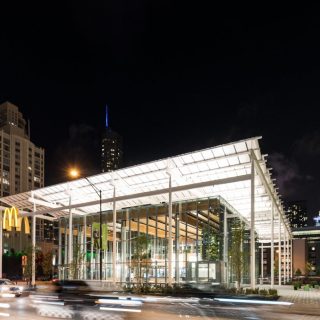
Earlier this year, McDonald’s opted for a modern, glassy facelift at Clark Street and Ontario in Chicago, where the iconic “Rock ‘n Roll” McDonald’s once made its name decades prior.

Designed by Ross Barney Architects, this flagship store now encompasses a full city block or 19,000 square feet, houses 70 trees at ground level and is even equipped with on-site solar panels to demonstrate how serious the fast-food giant is about a sustainable future.

while-the-structure-may-be-different-the-golden-arches-are-still-present-at-the-restaurant-which-will-be-open-24-hours-a-day-seven-days-a-week.jpg

That’s not all, touch-screen ordering kiosks have been added for efficiency, as well as cell phone chargers at every table ail and ample eating space to ensure you have a perfect, modern-day eating experience.

From start to finish, including design and construction, it took a mere 13 months to complete the project. And while it paints a picture of how the fast food purveyor may operate in the future, it’s been met with some skepticism.

BGR published an entire feature dedicated to ways McDonald’s is ripping off Apple’s look, starting with the glass exterior and commitment to renewable energy all the way to the expansive pedestrian space that is similar to San Francisco’s Apple store.

the-restaurant-features-self-order-kiosks-table-service-mobile-order-and-pay-and-delivery--services-that-are-becoming-increasingly-mainstream-at-mcdonalds-locations-across-the-us.png

But the detail hardest to overlook is the self-ordering kiosks, as McDonalds’s plans to have all 14,000 locations by 2020 equipped with these stalls. Yes, while the prospect of adding more machines gets rid of the cashier role, most chains claim to be swapping front of house roles to the back of the house. In fact, for McDonald’s specifically, Nick Karavites, owner and operator of the flagship store is even looking to employ 50 more people.

Nonetheless, this new design focuses on McDonald’s “Experience of the Future” revamp and 5,000 of the chain’s restaurants qualify for upgrades by 2020. Now, similar to Starbucks, you can order food from a mobile app and pick up your Big Mac while never speaking to a single soul.

Are you loving it?


5-1-3-1280x902.jpg

Marx Design created this no-frills branding for GoodFor™, a New Zealand-based food store that wants customers to bring their own packaging in to shop.

“GoodFor™ is a wholefoods refillery in Ponsonby, Auckland where you scoop and weigh your own goods and bringing your own packaging is encouraged. The company’s vision is to make sustainable shopping easier by eliminating plastic packaging in store as well as the promise of planting a tree for every purchase made.”

9-1-3.jpg
4-1-4.jpg

“Embracing the ethos of reduction, we developed a uncomplicated and effective brand language that allows for quick and clear communication with as little resource and cost as possible. As a start-up breaking in a new category, education on what they do and believe in is paramount to their success. To achieve this we developed a graphic style that could be used to take an almost protest-like stance on waste as well as highlight the quality of their produce and nature of their service.”

2-1-3.jpg
3-1-4.jpg
6-1-2.jpg

“All tied together with just the right amount of humour, GoodFor is a brand that has enjoyed almost immediate success (not to mention a healthy Instagram following), not only by what they’re doing, but how they’re doing it.”

7-1-3.jpg

Designed By: Marx Design

Location: New Zealand


2F3LUUFP5wAQKmfHjvex5V-970-80.jpg

Predicting the big branding and logo design trends for the year ahead means putting into practice lessons learned and tested in months gone by, while preparing for the shift to come. Alternatively, it requires gauging the change that has already happened and trying to further shift it in a desired direction.

Either way, our predictions of the big branding trends for 2018 are shaped heavily by what’s already taken place in 2017 – fake news and social influencers included.

As we have about a year to see how these predictions manifest, we’ll be testing our own theories out in our work at FINE along the way. Read on to find out what’s coming your way next year in branding.

01. Ethics and honesty

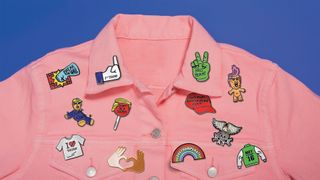
Shirt with rude pins about Trump

Sagmeister & Walsh launched its Pins Won’t Save the World campaign after Trump’s election

The rise of ‘fake news’ – any attempts to shroud business stories in baloney puffery – has set everyone’s spidey senses tingling. It’s more important than ever to avoid that shiny, superficial layer of marketing speak. Instead, think deeply about what’s real and true about your brand, then reflect it in every aspect of your branding scheme.

Or, if your proposition is more aspirational, make sure you’re prepared to deliver promises in real ways. No spin, no smoke and mirrors.

This branding trend means a good product may not be enough any more. Customers and employees now often expect more corporate responsibility – authentic, genuine, and tied to your brand purpose.

2015 study showed that 91 per cent of global consumers expected companies to do more than make a profit. They also wanted companies to operate responsibly to address social and environmental issues; 84 per cent said they sought out responsible products whenever possible; and 90 per cent said they would boycott a company if they learned of irresponsible or deceptive business practices.

02. Placemaking

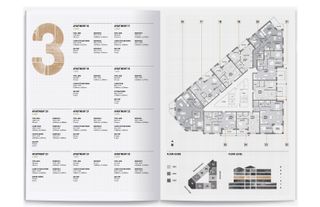
Brochure shows an annotated building floorplan

Jack Renwick Studio created an identity for property development Carpenters Wharf based the site’s previous use as a luxury furniture workshop

In an age where so much can be delivered remotely or digitally, design is becoming especially important to real-world experiences. Customer journeys and experiential thinking help to differentiate brands in the physical space. In the same way Nike approaches every touchpoint as a brand extension, players in real estate and other place-based industries – from retailers to hotels to services – will bring a new level of detail to our physical experiences.

In industries such as tech, design thinking is well-entrenched in product development, and this approach will start showing up in other industries, tied to real-time experiences in the real world.

Brands need to think about their channels, but bigger than that, they need to think about how design thinking can be applied directly to developing retail, hospitality, civic, or even residential environments, where the aim is to create differentiation before you even think about making a sale.

Either way, branding and design thinking are part of the process of creating an experience. A bit like the drones you increasingly see capturing video from above, brands will take a bird’s-eye view of the customer experience and journey.

03. Influencers influencing both ways

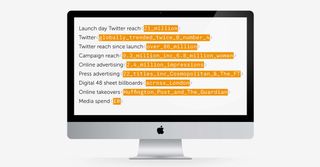
iMac screen shows stats celebrating the success of the Rewriting The Code project

The Partners’ #RewritingTheCode project leveraged social media to challenge attitudes that stop women around the world fulfilling their potential

It will become increasingly important to direct your brand towards a particular target, not just a common one. The world of blogging and social media has made it clear that certain individuals are opinion leaders who act as filters and amplifiers to the people who follow them. People are skeptical of what brands tell them, but embrace what peers and self-selected guides tell them.

These days, influencers are customers who are better placed to tell other customers about the brand, rather than the brand blowing its own trumpet.

Brands need to win these influencers over, which means these venerated customer personas will help shape brands as much as they help influence other consumers. Even if a brand doesn’t have a ‘name’ in mind to front its campaign, its can think about what consumer it wants to appeal to and then search out that ideal ‘influencer’ to help spread the word based on the brand’s needs and desires.

Now that people can share their views on an unprecedented scale, marketing is no longer one-to-one, or even one-to-many – it’s one to many… to many… to many. That’s important in a world where it takes anywhere from five to 20 interactions with marketing material to generate a sales lead, and 80 per cent of marketing reach comes from amplification via customers.

In 2018, influencer marketing will continue to increase. And it’s not just social media celebrities we’re talking about – brands will seek to harness their customers’ ability to convert other consumers, placing an increased emphasis on story sharing over storytelling.

04. UX going physical

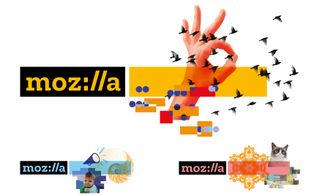
Mozilla logos show a hand making an ok gesture, the yes baby meme and a cat

Johnson Banks put the creation of a new Mozilla identity in the hands of the public

We will begin to see data influencing online user experiences in real time, as companies managing large client-facing websites will use machine learning and A/B testing to help automate usability testing. We might even see libraries or services that developers can integrate into their own applications. We may begin to see sites morph experience as a direct result.

And, if it can happen online, the same fluidity may not be far off in the real world. The use of mobile and the Internet of Things begins to blur what happens when you’re sitting at a desk browsing a website with what happens when you’re walking through a place.

As that increases, there’s a greater need for companies and brands to embed tech into their DNA. Technology is not something that happens in a channel; it’s something that helps to drive, inform, and influence all channels.

05. Building consumer confidence

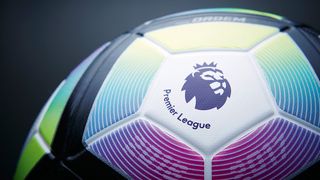
A football shows the Premier League logo with a lion

For its Premier League rebrand, DesignStudio shifted the focus onto the sport’s fans

From massive data breaches to successions of natural disasters, the overarching theme of security and confidence will affect branding in ways that are both subtle and overt.

Assurances behind what information is collected and stored (and why) are the obvious things. Less obvious is that consumers are looking for clues to determine whether a brand can be trusted, from the overall design quality and experiential thoughtfulness, to ratings and feedback on social media. Brands have to view all of their activities through the lens of a skittish public and a tumultuous world; particularly online.

It used to be that confidence came from big companies. It was kind of a shorthand for ‘reliable and established’. Now people are more adept at getting cues in more subtle ways. In tech, the rise of APIs and specialisation is one example; websites are increasingly an aggregation of other web services.

But in general, the trend is toward micro-services instead of monoliths, where there is a belief that reliable brands are focused on one thing, or one person, and doing it very well.


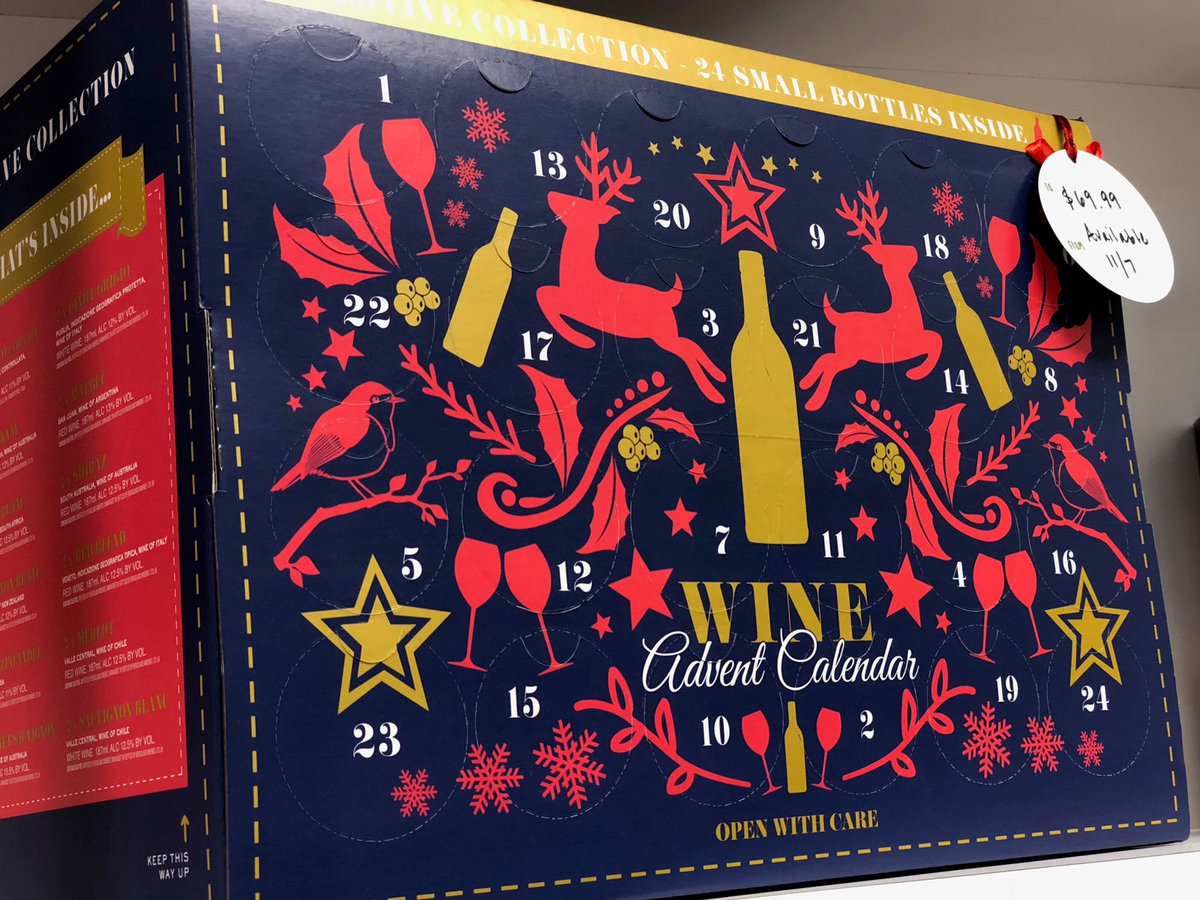
aldi-wine-advent-calendar-FT-BLOG0818.jpg

You get a boozy calendar! You get a boozy calendar!

That’s what everyone will be saying this year to their American friends with the news that Aldi is dropping Advent wine calendars.

No more drooling over your fellow lads and ladies in the UK as they sip daintily from their mini bottles of white, red and even rosé while counting down to Christmas. You officially get your own so long as you live near an Aldi that already sells alcohol. The best part? It’s at an affordable price of $69.99.

If that’s not enough to get you in the holiday spirit (yes, we know it’s only August), Aldi is also dropping an Advent Cheese Calendar with mini cubes of your favorites like cheddar and gouda for just $12.99.

Heck, why don’t you just purchase both and treat yourself every night to a little wine and cheese pairing while crushing holiday dreck like A Christmas Prince on Netflix? No judgment, but also, judgment.

Both calendars are set to hit stores on November 7th, and it’s highly recommended you get there early as supplies are known to sell out. If you’re forgetful, make a note in all your calendars and your friend calendars to ensure you’re sipping in style from December 1st to the 24th this year.


Artboard1copy2-100-1280x960.jpg

If you’re a sneakerhead, chances are you’ve copped a rare Nike or two in your day. Nike limited editions continue to push the boundaries of fashion and some of the special packaging that they include make for impressive collector’s items that fly off the shelves. Here are 15 awesome special edition Nike shoe packaging designs.


-Source http://www.thedieline.com


About us

Leverage agile frameworks to provide a robust synopsis for high level overviews. Iterative approaches to corporate strategy foster collaborative thinking to further the overall value proposition. Organically grow the holistic world view of disruptive innovation via workplace diversity and empowerment.


CONTACT US

CALL US ANYTIME


Newsletter